
You’ve probably seen them sitting there in your Camera app interface—those little crossed-out icons labeled "RAW" or "ProRes." If you are like most iPhone users, you might have tapped them once, noticed nothing drastically changed on your screen, and turned them back off to save space. Or perhaps you’ve heard tech enthusiasts raving about them but felt they were strictly for professional photographers and Hollywood directors.
Here is the secret: while these features are indeed powerful "Pro" tools, they aren't just for professionals. If you have ever tried to edit a sunset photo only to find the colors turning grainy, or if you have tried to brighten a dark video and it turned into a muddy mess, ProRAW and ProRes are the solutions you have been looking for. Let’s demystify these features and look at how you can use them to take your iPhone content to the next level.
Understanding Apple ProRAW: The Digital Negative
To understand ProRAW, we first need to look at how your iPhone normally takes a picture. When you snap a standard photo (usually saved as a HEIC or JPEG file), your iPhone makes thousands of split-second decisions for you. It adjusts the white balance, sharpens the edges, manages the noise, and compresses the file to keep the size small. It’s like buying a pre-baked cake from the grocery store—it’s delicious and ready to eat, but you can’t change the amount of sugar in it after you’ve bought it.
ProRAW is different. It captures the raw data straight from the camera sensor without discarding any information. It combines the computational photography magic of the iPhone (like Deep Fusion and Smart HDR) with the flexibility of a traditional RAW format.
Think of it this way: If a standard photo is a pre-baked cake, a ProRAW file is the bag of ingredients. It gives you the flour, eggs, sugar, and butter. It might not look perfect immediately, but you have total control to bake it exactly how you want.
When you shoot in ProRAW, you get massive flexibility in editing. You can recover details from bright shadows that would normally be pitch black, or tone down a blown-out sky without the image falling apart. It creates a "linear DNG" file that contains 10 to 12 times more data than a standard photo.
When Should You Use ProRAW?
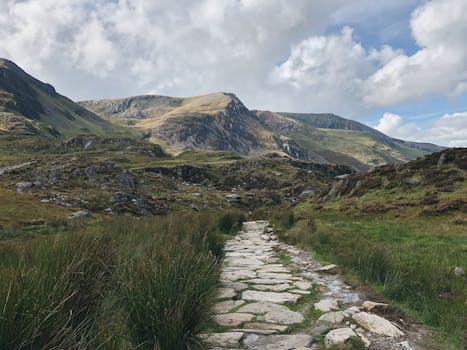
Because ProRAW files are significantly larger than standard photos (often 25MB to 75MB per photo compared to 2MB), you shouldn’t leave this setting on all the time. You definitely don’t need ProRAW for a picture of your parking spot or a quick snap of your lunch.
Here are the best scenarios to toggle that RAW button on:
- High Contrast Scenes: Landscapes with bright sun and dark shadows. ProRAW allows you to balance the lighting in post-production.
- Low Light and Night Mode: The iPhone’s noise reduction can sometimes make night photos look "waxy" or smooth. ProRAW lets you control how much grain remains in the image.
- Portraits You Plan to Print: If you want to blow a photo up for a wall canvas, ProRAW provides the extra detail and color depth needed for high-quality printing.
- Tricky White Balance: If you are shooting indoors with mixed lighting (like warm lamps and cool window light), ProRAW lets you completely change the white balance after the fact without ruining the colors.
Demystifying ProRes: Cinema Quality in Your Pocket
If ProRAW is for photos, ProRes is its heavyweight cousin for video. ProRes is a video codec largely used in the professional film industry. It offers higher color fidelity and less compression than the standard video formats your iPhone uses.
Standard iPhone video is highly compressed to save space. To do this, the phone groups similar colors together and tosses out data it thinks you won't notice. ProRes, however, keeps almost everything. This results in footage that is incredibly robust.
Why would an everyday user want this? It’s all about the edit. If you enjoy using apps like CapCut, LumaFusion, or iMovie to color grade your vacation videos, ProRes ensures your colors don’t "break" or become pixelated when you apply filters or adjustments. It preserves natural skin tones and intricate textures much better than standard video.
Warning: ProRes files are gigantic. One minute of 4K ProRes video can consume up to 6GB of storage. That is roughly the same space as 3,000 standard photos. Use this feature sparingly unless you have a lot of storage!
How to Enable and Use Pro Formats
These features are turned off by default to protect your storage. If you have an iPhone 12 Pro or later (for ProRAW) or an iPhone 13 Pro or later (for ProRes), here is how you can set them up.
Step 1: Enable in Settings
- Open the Settings app on your iPhone.
- Scroll down and tap on Camera.
- Tap on Formats.
- Under "Photo Capture," toggle on ProRAW & Resolution Control.
- Under "Video Capture," toggle on Apple ProRes.
Step 2: Shooting
Once enabled in settings, you will see new icons in your Camera app. They are usually located in the top right corner of the screen.
- For Photos: Tap the "RAW" icon. When it is not crossed out, you are shooting in ProRAW.
- For Video: Switch to Video mode and tap the "ProRes" icon. The app will usually tell you exactly how many minutes of footage you can record with your current available storage.
Managing the "Storage Monster"
The biggest barrier to using these formats is storage space. A weekend trip shot entirely in ProRAW and ProRes could easily fill up a 256GB iPhone. However, you don't have to delete your apps to make room. Here are a few practical tips for managing these high-quality files.
Use External Storage (iPhone 15/16 Pro Users)
If you have the iPhone 15 Pro or newer, you have a superpower: USB-C. You can plug a portable SSD drive directly into your phone. In fact, if you want to shoot 4K ProRes at 60 frames per second, the iPhone actually requires you to record directly to an external drive. This keeps your phone storage free and makes transferring files to a computer instant.
Convert After Editing
If you shoot a photo in ProRAW, edit it in the Photos app or Lightroom Mobile. Once you are happy with the edit, export it as a standard JPEG or HEIC to share it, and consider deleting the original RAW file if you are sure you won't need to re-edit it later.
iCloud Photos Optimization
Ensure "Optimize iPhone Storage" is turned on in your Photos settings. This uploads the massive full-resolution RAW and ProRes files to the cloud and keeps smaller, manageable versions on your device.
Final Thoughts
You don't need to be a professional cinematographer or a master photographer to benefit from the "Pro" features on your iPhone. You just need to be someone who cares about capturing a specific moment with the highest possible quality.
Start small. Next time you are watching a beautiful sunset, toggle that RAW button on. When you open the photo later and pull down the highlights to reveal the vibrant oranges and pinks of the clouds, you will understand exactly why that feature is there. Your iPhone is a powerhouse; don't be afraid to take the training wheels off every once in a while.