
Have you ever found yourself in this scenario? You are sitting at your desk, fully immersed in a YouTube video on your MacBook, when your iPhone suddenly buzzes with an incoming call. In the old days of Bluetooth technology, this was a moment of panic. You’d scramble to take your AirPods out, fumble to find the speaker button on your phone, or frantically try to disconnect them from your computer to pair them with your mobile.
But today, if you are deep in the Apple ecosystem, something different happens. The audio from your Mac fades out, your ringtone gently fades in through your earbuds, and with a double-tap or a squeeze of the stem, you are talking to your friend. No settings menus, no disconnecting, no frustration. This is the magic of AirPods Auto-Switching.
Introduced with iOS 14 and macOS Big Sur, this feature is one of the strongest arguments for going "all-in" on Apple devices. It transforms your AirPods from simple accessories for a single device into a pervasive audio layer for your entire digital life. However, as magical as it is, it can sometimes be a little mysterious. Let’s dive into how it works, how to make sure you are set up for success, and how to tame the magic if it gets a little too enthusiastic.
The "It Just Works" Factor: How Auto-Switching Functions
At its core, Auto-Switching is designed to follow your focus. Apple’s software algorithms constantly monitor which device you are actively using. If you are scrolling through Instagram on your iPhone, the audio routes there. If you put your phone down and hit "Play" on a Netflix show on your iPad, the audio seamless jumps over. If a Zoom call starts on your Mac, the AirPods prioritize that connection.
This seamless handoff relies on the H1 and H2 headphone chips found in modern Apple audio devices. It isn't just standard Bluetooth multipoint pairing; it is an iCloud-enabled handshake that verifies your identity across devices instantly. To experience this fluid movement, you need to ensure you have the right gear and the right settings.
Before you start troubleshooting or trying to force a switch, let’s make sure your hardware qualifies. Auto-switching works with:
- AirPods Pro (all generations)
- AirPods (2nd generation and later)
- AirPods Max
- Select Beats headphones (like the Powerbeats Pro and Beats Fit Pro)
Pro Tip: The most critical requirement for Auto-Switching is your Apple ID. All your devices—your iPhone, iPad, and Mac—must be signed in to the same iCloud account using Two-Factor Authentication. If you use a different Apple ID for work and personal use, auto-switching will not bridge that gap.
Setting the Stage: Enabling the Feature
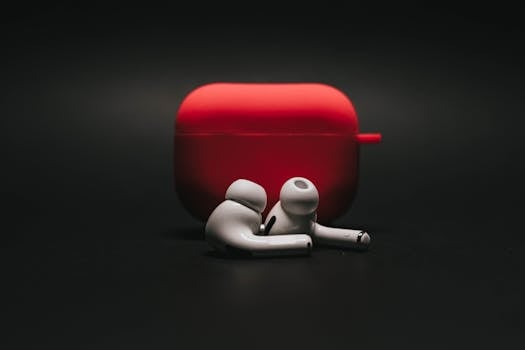
For many users, this feature is on by default. However, if you have ever tinkered with your Bluetooth settings or if you are setting up a new device, it is worth verifying that everything is configured correctly. There is nothing worse than expecting the audio to switch and being met with silence.
Here is how to check your settings on iPhone or iPad:
- Put your AirPods in your ears.
- Go to Settings and tap on the Bluetooth menu (or the AirPods banner at the top of Settings).
- Tap the small "i" (info) button next to your connected AirPods.
- Scroll down to the section labeled Connect to This iPhone/iPad.
- Ensure that Automatically is selected.
If this setting is set to "When Last Connected to This iPhone," the device will only grab the audio connection if it was the very last device you used your AirPods with. For the magic to happen, it must be set to "Automatically."
You will want to perform a similar check on your Mac:
- With AirPods connected, open System Settings.
- Click on Bluetooth and find your AirPods in the list.
- Click the "i" info button.
- Look for the Connect to This Mac setting and ensure it is set to Automatically.
Living with the Magic: Real-World Usage and The "Banner"
Once you are set up, usage is generally passive—you don't do anything; you just live your life. However, understanding the visual cues Apple provides can help you master the experience. The most important visual cue is the notification banner.
Let's say you are listening to a podcast on your iPhone, but you open your MacBook to check an email. Suddenly, a video auto-plays in your browser on the Mac. Your AirPods might switch over to the Mac audio. When this happens, a small banner will appear in the top right corner of your Mac screen (or the top of your iPhone/iPad screen depending on the direction of the switch).
This banner is actually an interactive button. It will usually say something like "Moved to MacBook Pro." If the switch happened by mistake—perhaps you didn't want to hear that auto-playing video—you can click the blue arrow icon or the "Connect" button inside that banner to immediately revert the audio back to the original device. Speed is key here; the banner only lingers for a few seconds.
Quick Note: Auto-Switching prioritizes "active" audio events. A phone call or a FaceTime call is considered a high-priority event and will almost always steal the connection from music or movies. However, system sounds (like a keyboard click or a notification ding) generally won't trigger a full switch, saving you from constant interruptions.
When Magic Becomes Mischief: How to Tame Auto-Switching
As wonderful as this feature is, there are times when it might drive you up the wall. We have all been there: you are listening to music on your iPhone while working on your iPad, and every time you scroll past a video on Twitter (X) on the iPad, your music cuts out and the AirPods switch over to the silent video. Or perhaps you share an iPad with a family member; you are listening to music on your phone, and suddenly your audio cuts because your child started a game on the family iPad.
In these cases, mastering Auto-Switching means knowing how to turn it off for specific devices. You don't have to disable it everywhere—you can be selective. For example, you might want your AirPods to automatically connect to your iPhone and Mac, but not your iPad.
To stop a specific device from "stealing" your AirPods connection:
- Connect your AirPods to the device you want to restrict (e.g., the family iPad).
- Go to Settings > Bluetooth and tap the "i" next to your AirPods.
- Change Connect to This iPad from "Automatically" to "When Last Connected to This iPad".
By making this change, the iPad will no longer aggressively grab your audio connection. If you want to use your AirPods with that iPad, you will simply have to select them manually from the Control Center or AirPlay menu—just like in the old days. This gives you the best of both worlds: automation on your personal devices, and manual control on shared or secondary devices.
Embracing the Ecosystem
Mastering AirPods Auto-Switching is really about trusting the ecosystem while knowing where the "override" buttons are. When it works, it feels like the future of computing—fluid, intuitive, and wire-free. It removes the friction between your devices, making your iPhone, iPad, and Mac feel like extensions of a single digital brain.
So, go ahead and enable those settings. Start a playlist on your phone, open your laptop, and enjoy the seamless transition. And remember, if the magic ever gets a little too chaotic, you now have the knowledge to take back control.