
Let’s be honest: the best camera is the one you have with you. For millions of us, that’s the iPhone sitting in our pocket right now. Over the last few years, Apple has transformed the iPhone from a simple point-and-shoot device into a powerhouse of photography that rivals expensive DSLRs. However, most users simply open the Camera app, tap the big white button, and hope for the best.
While the iPhone’s automatic settings are incredible, relying on them 100% of the time means you are missing out on the creative control that turns a "nice snapshot" into a "stunning photograph." There are features tucked away in menus and hidden behind gestures that can completely change how your photos look.
Whether you are trying to capture a fast-moving pet, a moody sunset, or a professional-looking headshot, you don’t need to buy a new lens. You just need to unlock the potential already built into your software. Here are seven "hidden" tricks to help you shoot like a pro.
1. Nail the Focus and Exposure with AE/AF Lock
Have you ever tried to take a photo of something specific—like a flower in the foreground or a person in a crowd—only to have your iPhone automatically refocus on the background the moment you moved your hand? This is a common frustration, but the solution is built right into the viewfinder.
The iPhone continuously scans the scene to find a subject, but you can tell it to "lock" its attention on one specific spot. This is called the Auto-Exposure/Auto-Focus Lock (AE/AF Lock).
- Open your Camera app and frame your shot.
- Tap on your subject on the screen and hold your finger down for a couple of seconds.
- You will see a yellow box pulse, and "AE/AF LOCK" will appear in yellow at the top of the screen.
Once this is locked, you can move the camera around, change your angle, or wait for people to walk through the frame, and your iPhone will not change the focus or the brightness levels. This is essential for street photography or macro shots where maintaining a sharp focal point is difficult.
Pro Tip: This is especially useful in low light or at concerts. Lock the focus on the brightly lit stage so your camera doesn't try to brighten up the dark crowd, which usually results in a grainy, washed-out image.
2. The "Magic" of Long Exposure (Without a Tripod)
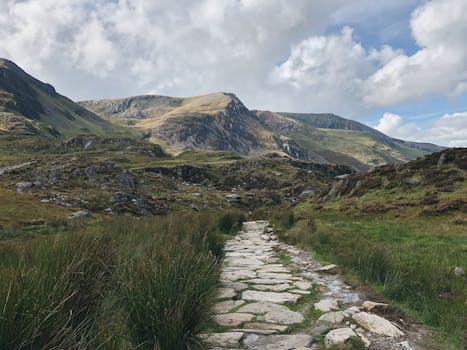
You know those dreamy, professional landscape photos where waterfalls look like silky smooth ribbons, or car headlights turn into long streaks of light on a highway? Historically, capturing those images required a heavy camera, a sturdy tripod, and a lot of knowledge about shutter speeds. Your iPhone can do this in seconds using a feature you likely already have turned on: Live Photos.
Live Photos capture 1.5 seconds of video before and after you take a picture. Most people view these as jagged little video clips, but the iPhone can mathematically combine those frames to simulate a long exposure.
- Make sure Live Photo is turned on (the concentric circles icon in the top right corner).
- Take a steady shot of something with continuous motion (a flowing river, a fountain, or moving traffic).
- Open the photo in your gallery and tap on the "Live" dropdown menu in the top left corner.
- Select Long Exposure.
The software will stabilize the non-moving parts of the image (like rocks or buildings) and blur the moving parts. The result is an ethereal, artistic shot that looks like it took hours to set up.
3. Master the "Hidden" Drawer for Manual Controls
For years, the iPhone camera interface was minimalist to a fault. Recently, Apple added a "drawer" of manual controls that gives you granular command over your images, but many users don't realize it exists because it is tucked away.
If you look at the top of your camera screen (or the side, if holding it horizontally), you will see a tiny arrow icon. Tapping this arrow—or simply swiping up on the viewfinder—reveals a row of icons just above the shutter button. This is your command center.
Inside this drawer, you unlock several superpowers:
- Aspect Ratio: Switch from the standard 4:3 to 16:9 for cinematic shots, or 1:1 for perfect Instagram squares.
- Timer: Essential for hands-free selfies or group shots.
- Filters: Apply dramatic black and white or vivid warm tones before you even take the shot.
Using this drawer prevents you from having to "fix" photos later in editing apps. You can set the mood exactly how you want it before the shutter snaps.
4. Use the Grid for Perfect Composition
Composition is the difference between a chaotic snapshot and a pleasing photograph. The most famous rule in photography is the "Rule of Thirds"—the idea that an image is most pleasing when the subject is placed along grid lines that divide the image into nine equal parts.
Your iPhone has a built-in grid to help you align horizons and place subjects, but it is turned off by default. To turn it on:
- Go to your iPhone Settings.
- Scroll down and select Camera.
- Toggle the switch for Grid to ON.
Now, when you open your camera, you will see four faint lines. Use the horizontal lines to keep your horizons straight (no more tilted ocean photos!). Use the intersections of the lines to place your subject. If you are taking a portrait, try placing the person’s eye on one of the top intersections rather than dead-center. It instantly makes the photo feel more dynamic and professional.
5. Adjust Depth of Field *After* Shooting
Portrait Mode is one of the most popular features on the iPhone, using software to blur the background (bokeh) and make the subject pop. However, sometimes the automatic blur is too strong, making the photo look fake, or too weak, leaving the background distracting.
The hidden trick here is that Portrait Mode is not permanent. You can adjust the "aperture" (the amount of blur) even after you have taken the photo and left the location.
- Open a photo taken in Portrait Mode.
- Tap Edit in the top right corner.
- Look for the f-stop number (e.g., f/4.5) or the little "f" icon in the top left.
- A slider will appear at the bottom. Slide left to increase the blur (lower f-number) or right to decrease the blur (higher f-number).
This allows you to save a photo where the software accidentally blurred out someone’s hair or ears by dialing back the effect until it looks natural.
6. Burst Mode for Action Shots
Trying to photograph a dog jumping, a child scoring a goal, or a splash in a pool is notoriously difficult. By the time you tap the shutter, the moment is usually gone. This is where Burst Mode saves the day.
On older iPhones, you would hold the shutter button down. On newer iPhones (iPhone XS and later), holding the shutter button now starts a video (QuickTake). To activate Burst Mode on modern iPhones:
- Tap the shutter button and immediately slide it to the left.
- You will see a counter rapidly increasing in the circle—this is the number of photos being taken.
- Release your finger to stop.
Your iPhone is taking 10 photos per second. Afterward, go to your Photos app, select the burst stack, tap "Select," and you can scroll through every single frame to choose the one perfectly sharp moment where the action was at its peak. The phone will even suggest the best shots by marking them with a grey dot.
7. Manual Exposure Adjustment
Have you ever tried to take a photo of a beautiful sunset, but the iPhone brightened the image so much that the sun looked like a white blob and the sky lost its color? The iPhone’s brain tries to make everything evenly lit, but sometimes you want shadows and drama.
You can override the automatic brightness instantly:
- Tap the screen to focus on your subject.
- A yellow box with a sun icon will appear next to it.
- Place your finger on the sun and slide down to darken the image, or slide up to brighten it.
By sliding down, you can turn a daytime photo into a moody silhouette, or recover the rich oranges and purples of a sunset that the automatic settings were trying to wash out. This simple slide is often the only difference between an amateur shot and a professional-looking capture.
Final Thought: The best way to learn these tricks is to take your phone out for a "photo walk." Don't wait for a special occasion. Walk around your neighborhood and practice sliding the shutter for bursts, locking your focus on flowers, and turning cars into light streams with Live Photos. The more you play with these hidden features, the more natural they will feel when the perfect moment actually arrives.