
You’ve probably had this moment: You’re standing in front of a breathtaking landscape, the lighting is perfect, and you snap a photo with your iPhone. It looks great—after all, modern iPhone cameras are miracles of engineering. But then you look at a professional photographer’s shot of a similar scene, and there is a richness, a depth, and a clarity that your photo seems to lack. You might think it’s just the expensive gear, but if you have a "Pro" model iPhone (12 Pro or later), you are holding a cinema-grade camera in your pocket. The secret to unlocking that potential lies in two features: ProRAW and ProRes.
For years, these formats were reserved for people lugging around heavy DSLRs and cinema cameras. Now, Apple has democratized them. However, simply turning them on isn't enough; you need to know why they matter and how to handle the massive amount of data they create. Let’s dive into how you can stop just "taking pictures" and start creating images.
Unlocking the Power of ProRAW: The Digital Negative
To understand ProRAW, you first need to understand what your iPhone usually does. When you take a standard photo (HEIF or JPEG), your iPhone acts like an aggressive chef. It looks at the ingredients (the light data), chops them up, seasons them, cooks them, and serves you a finished meal. It makes decisions about contrast, white balance, and sharpening instantly. Most of the time, the meal is delicious. But what if you wanted to change the seasoning later? You can’t. The data is "baked in."
Apple ProRAW is different. It gives you the raw ingredients. It combines the computational photography magic of the iPhone (like Deep Fusion and Smart HDR) with the uncompressed data of a traditional RAW format. It preserves vastly more information about color and light range.
Pro Tip: Think of a standard JPEG as a printed photograph and a ProRAW file as a film negative. You can write on a printed photo, but you can’t change the lighting. With a negative, you can completely change how the image looks during the development process.
Why does this matter for you? Imagine you take a photo of your friend against a bright window. In a standard photo, their face might be a silhouette, or the window might be blown out white. With ProRAW, that "hidden" detail is still there. When you edit the photo, you can pull the shadows up to reveal their face without the image turning into a grainy mess, and you can dial back the highlights to see what’s outside the window.
How to Set Up and Shoot ProRAW
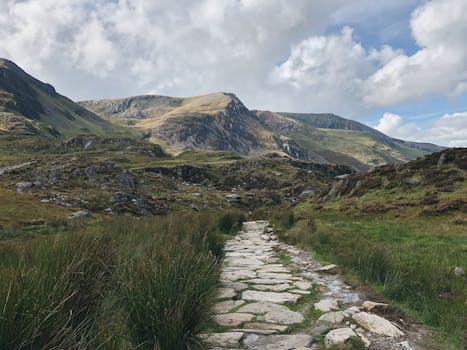
ProRAW isn't enabled by default because the file sizes are significantly larger—we’re talking 25MB to 75MB per photo compared to the usual 2MB. You don’t want to use this for pictures of your grocery list or a parking spot number. You want to save it for the shots that matter.
Here is how to get your iPhone ready for professional photography:
- Open your Settings app and scroll down to Camera.
- Tap on Formats.
- Under "Photo Capture," toggle on ProRAW & Resolution Control.
- Tap into the "Pro Default" menu. If you have an iPhone 14 Pro or newer, select ProRAW Max (up to 48MP) to get the highest resolution possible.
Now, open your Camera app. You will see a "RAW" icon in the top right or left corner. By default, it will be crossed out. When you see a scene that deserves the pro treatment—a stunning sunset, a detailed portrait, or a moody architectural shot—tap that icon to uncross it. Now you are shooting with the full power of the sensor.
Stepping Up Your Video Game with ProRes
If ProRAW is for photographers, ProRes is for the aspiring filmmakers. ProRes is an industry-standard video codec used in commercials, feature films, and television. Unlike the standard video your iPhone shoots (which is highly compressed to save space), ProRes preserves incredible color fidelity and low compression.
When you shoot standard video, the iPhone compresses similar colors together to save space. For a TikTok or an Instagram story, this is fine. But if you try to edit that footage—make it moodier, brighter, or change the color grade—the video can start to look "blocky" or display weird banding artifacts in the sky.
ProRes keeps that data intact. It allows for smoother color gradients and gives you much more flexibility in post-production. It is particularly useful if you are shooting with the intention of editing your video on a computer using software like Final Cut Pro or DaVinci Resolve.
Important Note: ProRes files are gigantic. One minute of 4K ProRes video can consume nearly 6GB of storage. That is not a typo. If you have a 128GB iPhone, you could fill your entire phone in less than 20 minutes of shooting.
The Storage Reality Check: Managing the Data
This brings us to the most practical aspect of shooting like a pro: data management. If you leave ProRAW and ProRes on all the time, your iCloud storage will scream for mercy within a week. Using these formats requires a change in workflow.
For ProRAW photos, the workflow is manageable. Shoot in RAW, but be selective. After a shoot, go through your photos. "Favorite" the best shots that you intend to edit, and consider converting the rest to standard HEIF or deleting the duplicates. You only need the RAW file if you plan to spend time editing it.
For ProRes video, especially if you have an iPhone 15 Pro or iPhone 16 Pro with USB-C, the game has changed. You can now record ProRes directly to an external SSD. This is a game-changer for videographers.
- Get a small, fast portable SSD (like a Samsung T7 or SanDisk Extreme).
- Plug it into the USB-C port of your iPhone.
- Wait for the "USB-C" label to appear in the Camera app near the ProRes toggle.
- Hit record. The video bypasses your phone's internal storage and goes straight to the drive.
This method allows you to shoot hours of cinema-quality footage without worrying about deleting apps to make room.
The Edit is Where the Magic Happens
Here is the hard truth: A raw ProRAW photo often looks worse straight out of the camera than a standard photo. It might look flat, desaturated, and unsharp. That is by design. It’s a blank canvas waiting for paint.
To get the "Pro" look, you must edit. You don't need a computer for this; the built-in iOS Photos app is surprisingly powerful for ProRAW.
Open a ProRAW photo, tap Edit, and try this workflow:
- Auto: Start here to see what the iPhone suggests, but don't stop here.
- Highlights & Shadows: This is ProRAW's superpower. Drag the Highlights down (to the left) to recover blue skies. Drag the Shadows up (to the right) to see details in dark areas. You will be shocked at how much detail is hiding there.
- Warmth & Tint: Adjust the white balance to change the mood of the shot.
- Definition & Sharpness: Add a little bit of pop to the textures.
If you want to go further, download Adobe Lightroom Mobile. It handles ProRAW files natively and offers much more granular control over specific colors and masking. For example, you can select just the sky and make it bluer, without turning the rest of the photo blue.
Mastering ProRAW and ProRes isn't just about flipping a switch in your settings; it's about changing your mindset. It’s about moving from "capturing a memory" to "crafting an image." It takes a little more storage and a little more time to edit, but when you see the final result—crisp, vibrant, and exactly how you envisioned it—you’ll realize it’s worth every megabyte.