
You remember the feeling when you first unboxed your AirPods. You flipped open the lid, watched that satisfying little animation pop up on your iPhone, and put them in your ears. The music started, and it sounded good. Really good.
But here is a secret that most Apple users don’t know: your AirPods are capable of sounding much, much better. Out of the box, Apple configures these devices to appeal to the widest possible audience with a "flat" sound profile. While that is safe, it means you aren't hearing your music, movies, or podcasts the way you specifically want to hear them.
Whether you have the standard AirPods, the Pro model, or the Max, there is a treasure trove of hidden settings buried deep within iOS that can dramatically improve audio fidelity, clarity, and usability. From customizing frequencies to your specific hearing ability to stopping your audio from hijacking your iPad unexpectedly, let’s dive into the essential tweaks you need to make right now.
1. Unlock the Secret Equalizer: Headphone Accommodations
If you only change one setting from this entire list, make it this one. Most people assume AirPods don't have a customizable equalizer (EQ), but they actually do—it is just hiding in the Accessibility menu.
Apple includes a feature called "Headphone Accommodations" designed to help people with hearing challenges, but it is effectively a powerful audio booster for everyone. It allows you to brighten the sound, boost vocal clarity, or enhance softer sounds that usually get lost in the mix.
How to set it up:
- Open Settings and go to Accessibility.
- Scroll down to the "Hearing" section and tap Audio/Visual.
- Tap Headphone Accommodations and toggle the switch to ON.
Once enabled, you will see a few different tuning options. You can select "Balanced Tone" for a general boost, "Vocal Range" if you listen to a lot of podcasts or audiobooks, or "Brightness" if you want to emphasize the treble and high notes in music.
Pro Tip: For the ultimate custom experience, choose "Custom Audio Setup." This walks you through a hearing test where you listen to faint voices and different frequencies. Your iPhone will then build a custom sound profile specifically for your ears, compensating for any frequencies you might not hear as well. The difference in clarity can be mind-blowing.
2. Immerse Yourself with Personalized Spatial Audio
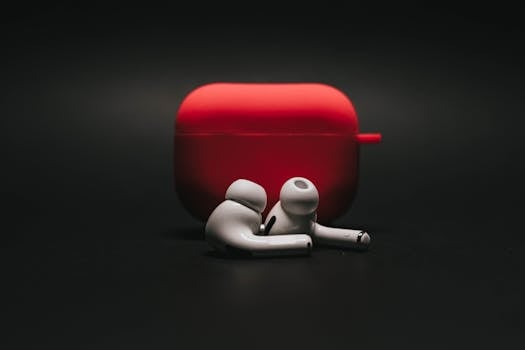
Spatial Audio is Apple’s take on 3D surround sound. Instead of the music sounding like it is coming from two small speakers shoved in your ear canals, Spatial Audio makes it sound like the audio is coming from all around you—front, back, and above. It creates a soundstage that feels like you are sitting in a movie theater or a concert hall.
However, to get the most out of this, you need to calibrate it. We all have different head shapes and ear shapes, which affects how we perceive sound direction. Apple has a feature that uses the TrueDepth camera (the FaceID camera) on your iPhone to scan your ears and create a personalized map for the sound algorithms.
How to personalize your soundstage:
- Put your AirPods in and open Settings.
- Tap on your AirPods name at the very top of the menu.
- Scroll down and tap Personalized Spatial Audio.
- Follow the on-screen prompts to scan your face and both ears.
Once this is done, the difference is noticeable. The bass usually feels tighter, and the separation between instruments becomes much clearer. If you are watching a movie on Apple TV+ or listening to a Dolby Atmos track on Apple Music, the experience transforms from "listening to headphones" to "being in the room."
3. Master Noise Control and Adaptive Audio
If you own the AirPods Pro or AirPods Max, you are likely familiar with Active Noise Cancellation (ANC) and Transparency Mode. ANC shuts out the world (perfect for airplanes), while Transparency lets outside sound in (perfect for ordering coffee). However, with the latest iOS updates and AirPods Pro (2nd Gen), there is a new sheriff in town: Adaptive Audio.
Adaptive Audio blends transparency and noise cancellation dynamically. It listens to your environment constantly. If a jackhammer starts up nearby, it dampens the noise. If you walk into a quiet room, it opens up the sound so you don't feel that weird "underwater" pressure.
Essential settings to check:
- Conversation Awareness: This is a game-changer or an annoyance, depending on how you use it. When enabled, your AirPods will automatically lower the volume and enhance the voice of the person in front of you as soon as you start speaking. It’s magic for quick chats, but if you like to sing along to your music, turn this OFF, or your music will keep dipping in volume every time you belt out a chorus.
- Loud Sound Reduction: Make sure this is enabled within the AirPods settings. It protects your hearing by instantly muffling sharp, loud noises (like a siren passing by) without ruining the overall audio quality.
Quick Fix: If your noise cancellation feels weak, run the "Ear Tip Fit Test" in your AirPods settings. If the seal isn't airtight, bass escapes and noise leaks in. The test plays a short clip and uses internal microphones to tell you if you need to switch to a different size ear tip.
4. Stop the "Automatic Switching" Madness
We have all been there. You are listening to a podcast on your iPhone, and you decide to open your iPad to check an email. Suddenly, your audio cuts out because your AirPods decided to hijack the connection to the iPad, even though nothing was playing there. While the Apple ecosystem magic is great, Automatic Switching can be overly aggressive.
If you value a consistent audio stream over magical switching, you can lock your AirPods to the device you are currently using.
How to regain control:
- With your AirPods connected to your iPhone, go to Settings > Bluetooth.
- Tap the little "i" icon next to your AirPods.
- Look for the setting labeled Connect to This iPhone.
- Change it from "Automatically" to "When Last Connected to This iPhone".
You will need to repeat this step on your iPad or Mac if you want the behavior to stop there as well. By changing this, your AirPods will only connect to a device if you specifically tell them to (via the AirPlay menu) or if it was the last device you used. No more interrupted choruses just because you woke up your MacBook.
5. Boost Call Quality and Microphone Clarity
Sound isn't just about what you hear; it's also about how you are heard. If people constantly complain that you sound distant, muffled, or that they can hear the wind more than your voice, there are settings to fix that.
First, check your Microphone settings in the Bluetooth menu. By default, it is set to "Automatic," meaning the AirPods switch the mic between the left and right bud depending on signal strength or battery. However, if one AirPod fits your ear slightly better or has a cleaner mic mesh, the switching can cause audio glitches. You can force the mic to always use the Left or Right bud if you know one performs better.
More importantly, utilize Voice Isolation. This isn't in the Settings app; it's in the Control Center.
How to activate Voice Isolation:
- Start a phone call or a FaceTime call.
- Swipe down from the top-right corner of your screen to open Control Center.
- Tap the button that says Mic Mode (top right).
- Select Voice Isolation.
This feature uses machine learning to strip away background noise—traffic, barking dogs, blenders—and prioritizes your voice frequency. It makes a massive difference for the person on the other end of the line.
Your AirPods are an incredible piece of engineering, but they are not one-size-fits-all. By taking five minutes to adjust the Headphone Accommodations, personalize your Spatial Audio, and manage your noise controls, you can unlock a level of audio quality that you didn't even know you were missing. Happy listening!