
Have you ever looked at a stunning, professional photograph where the subject is perfectly sharp, but the background melts away into a dreamy, creamy blur? In the photography world, that effect is called "bokeh," and for a long time, it was exclusively the territory of expensive DSLRs and heavy lenses. But if you have a modern iPhone in your pocket, you have that same power right at your fingertips.
Apple’s Portrait Mode has revolutionized mobile photography. By using multiple lenses and sophisticated software (and LiDAR scanners on Pro models), your iPhone creates a depth map of your scene to artificially simulate that professional depth-of-field look. However, simply switching to "Portrait" doesn't guarantee a masterpiece. To truly unlock the potential of your camera and stop taking snapshots, you need to know how to manipulate the settings just like a pro.
Whether you are snapping photos of your kids, your pets, or your morning coffee, these tips will help you elevate your iPhone photography game instantly.
1. Master the Distance: The "Sweet Spot"
One of the most common mistakes users make with Portrait Mode is standing too close or too far from the subject. Unlike a standard photo where the iPhone can focus on almost anything, Portrait Mode requires a specific distance to calculate the depth map accurately. If you are too close, the camera cannot distinguish the subject from the background; if you are too far, the depth effect won't trigger.
Your iPhone will actually tell you what to do—look for the yellow instructions at the top of the screen that say "Move farther away" or "Place subject within 8 feet." However, for the most artistic results, you shouldn't just aim for "working." You want the optimal distance.
- The 2-to-8 Rule: Generally, you want your subject to be between two and eight feet away from the camera.
- Create Separation: The effect works best when there is significant physical distance between your subject and the background. If your subject is leaning directly against a brick wall, the iPhone will struggle to blur the wall. Pull your subject five feet away from the wall, and watch that background melt away.
- Check the Lenses: On Pro models, you can switch between 1x, 2x, or 3x zoom in Portrait Mode. The 3x telephoto lens is often the most flattering for human faces as it compresses features slightly, avoiding the "fisheye" look of wider lenses.
Pro Tip: Don’t be afraid to move your feet. Zooming with your feet often yields better composition than relying solely on digital cropping later. If the lighting is good, try stepping back and using the telephoto (3x) option for a classic portrait look.
2. Control the Blur: Adjusting the f-Stop
Here is the secret weapon that most casual users never touch: Depth Control. When you take a photo in Portrait Mode, the iPhone makes a guess about how blurry the background should be. Sometimes it’s perfect, but often it can look a bit fake or too aggressive.
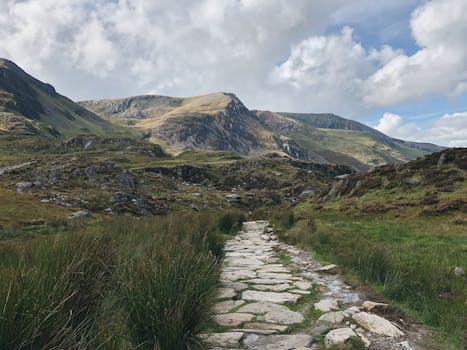
In traditional photography, the "aperture" (measured in f-stops) controls how much of the image is in focus. A low number (like f/1.4) means a very blurry background. A high number (like f/16) means everything from the nose to the mountains in the back is sharp. The iPhone lets you adjust this virtually, even after you’ve taken the photo.
To adjust this:
- Open your photo in the Photos app and tap Edit.
- Tap the f icon in the top left (or bottom depending on your iOS version).
- A slider will appear at the bottom. Slide left for more blur (lower f-number) and right for less blur (higher f-number).
Why would you want less blur? Sometimes the iPhone blurs out things you want to keep, like ears, hair, or a detail in the background. Increasing the f-stop slightly (to around f/4.5 or f/5.6) often makes the photo look much more realistic and less like a computer-generated image.
3. Light It Up: Using Portrait Lighting Effects
Lighting is the lifeblood of photography. Portrait Mode struggles significantly in low light (unless you have a newer Pro model with Night Mode Portrait). Grainy photos make the edge detection fail, leading to that weird look where hair gets chopped off or glasses disappear. Always seek out natural light—windows are your best friend.
However, Apple provides a suite of "Portrait Lighting" effects that simulate studio environments. You can see these as a carousel at the bottom of the viewfinder, or apply them during editing. Knowing when to use which is key:
- Natural Light: The default setting. Use this for 90% of your shots for a clean, unaltered look.
- Studio Light: This brightens the facial features without blowing out the background. It’s essentially a virtual beauty filter that mimics a ring light. Use this if your subject’s face is in shadow.
- Contour Light: Adds dramatic shadows to the cheekbones and nose. This creates a moody, defined look but can be harsh if the natural light is already contrasty.
- Stage Light / Stage Light Mono: These turn the background completely black (or black and white). These are difficult to pull off unless you have a very clean outline of your subject, but they can look incredible for dramatic profile shots.
Quick Fix: Did you take a great photo but the face looks a little dark? Go to Edit, select "Studio Light" from the lighting carousel, and use the slider to increase the intensity. It acts like a spotlight specifically for the face!
4. Focus and Exposure Lock
Have you ever tried to take a portrait, but the camera keeps refocusing on the background or changing the brightness wildly? You need to take control of the focus manually. While the iPhone is smart, it doesn't always know that you want to focus on the eyelashes rather than the nose, or the flower petal rather than the leaf.
To ensure your subject is razor-sharp:
- Tap and Hold: Tap the screen right on your subject's face (or eyes, specifically). Hold your finger there until you see AE/AF LOCK appear in yellow at the top of the screen.
- Adjust Brightness: Once locked, a little sun icon appears next to the yellow box. Slide your finger up or down to manually brighten or darken the image.
This is particularly useful in "backlit" situations (where the sun is behind your subject). The iPhone will naturally try to darken the photo to see the sun; by locking focus and sliding the sun icon up, you can brighten your subject's face properly, creating a lovely, high-key dreamy effect.
5. It’s Not Just for Faces
When Portrait Mode first launched, it was strictly for human faces. Today, the technology has evolved to recognize objects, pets, and food. This allows for incredibly artistic still-life photography.
Use Portrait Mode to elevate your food photography by blurring the busy restaurant background, focusing solely on the texture of the dish. Use it for pet photography to capture the intense detail in your dog’s eyes while softening the messy living room behind them.
However, inanimate objects can be tricky for the depth sensor. Here is how to handle them:
- Check the Edges: Glass and transparent objects (like wine glasses) are the enemy of Portrait Mode. The sensor often tries to blur through the glass. Try to shoot solid objects for the best results.
- Create Distance: Just like with people, make sure your object isn't right up against a wall. If you are photographing a flower, find an angle where the ground or wall is far in the background.
- Edit the Focus Point: If the camera focused on the wrong part of the object, you can actually change the focal point after taking the photo on newer iPhones (iPhone 13 and later running iOS 16/17). Just go to Edit and tap on the area of the photo you want to be sharp.
The "Foreground" Trick: We talk a lot about blurry backgrounds, but Portrait Mode can also blur the foreground. Try holding a leaf or a flower very close to the camera lens while focusing on a subject further away. The object close to the lens will turn into a soft, colorful blur, adding amazing depth and a "pro" feel to the image.
Your iPhone is a powerful creative tool, but it requires a little guidance to perform its best. By mastering distance, controlling your f-stop, and utilizing lighting effects, you can trick almost anyone into thinking you shot your photos on a professional rig. So, wipe off that camera lens, find some good light, and start shooting!